
Health benefits of blackcurrants
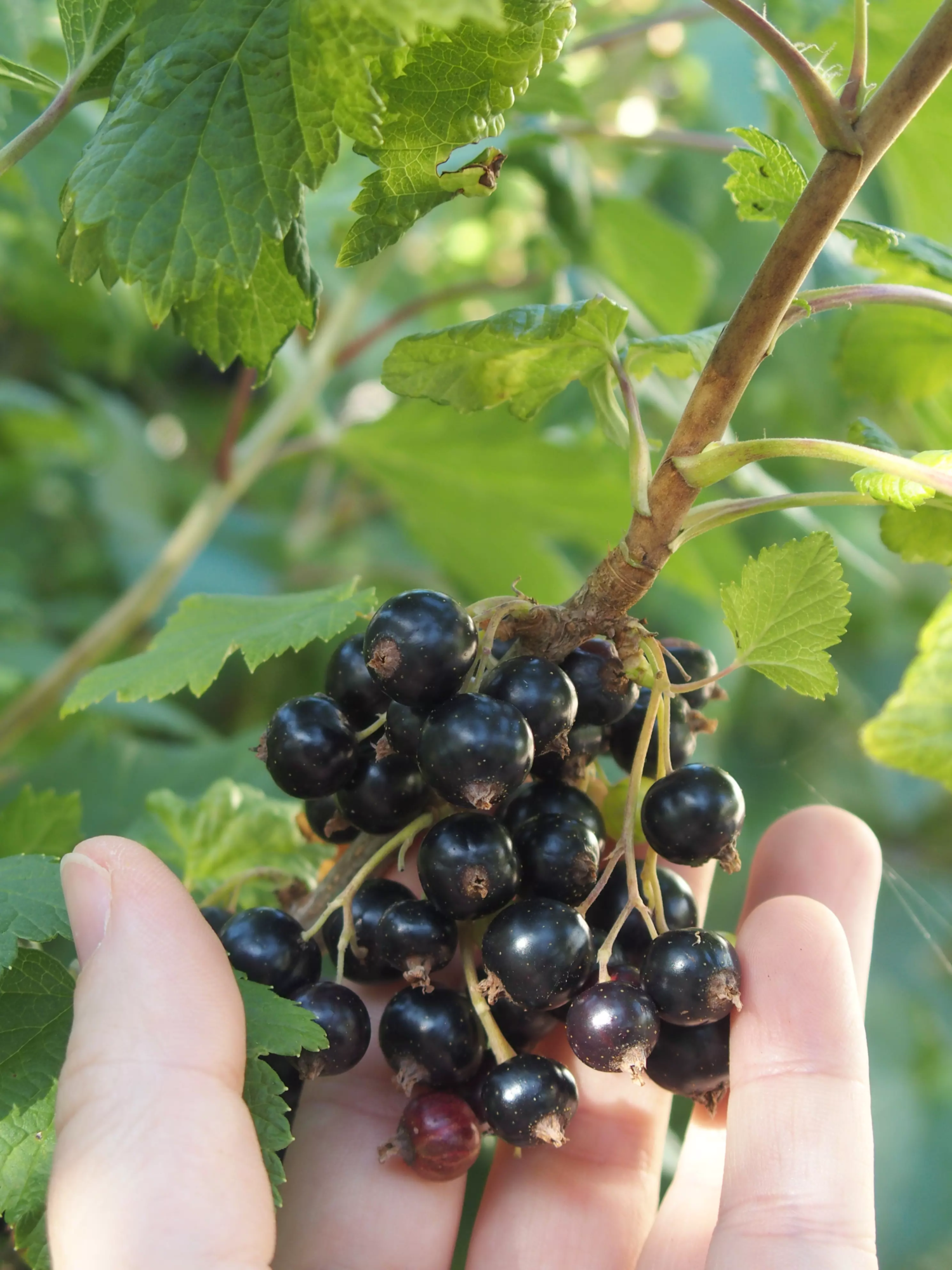
Blackcurrants are well known mainly for their multiple culinary uses. But they also have wonderful potential for human health:
They have anti-inflammatory, immuno-modulatory, antioxidant and antibacterial effects on our body.
The berries have an extremely high content of vitamin C, anthocyanins and polyphenols.
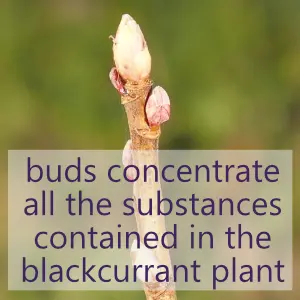
But all other parts of the plant can be used, too: leaves, buds and branches!
The blackcurrant is definitely a proven valuable help for our metabolism. It combats all forms of stress: physical, mental and dietary!
Scientific research
Researchers from all over the world commonly agree on the fact that the blackcurrant has extraordinary health benefits. Therefore, you may have heard about the blackcurrant being a superfruit*.
These researchers have observed the biological effects on the human body. Although exact processes are not yet known in some domains, other processes are fully explored – many are still under investigation.
Research on diseases
You may eat blackcurrants or drink their juice. You can make herbal tea with the leaves. Or you can take medicines and nutraceuticals with blackcurrants. Whatever your preference is – the intake of blackcurrants and the absorption of their active ingredients by your body can have positive effects on:
- the cardiovascular system
- the nervous system
- the pulmonary system
- the ocular system
- the renal system
- bones
- tumors
- skin
- wounds
Therapeutic potential
The therapeutic potential of the blackcurrant is due to the biological effects of its active ingredients:
Active ingredients of the blackcurrant
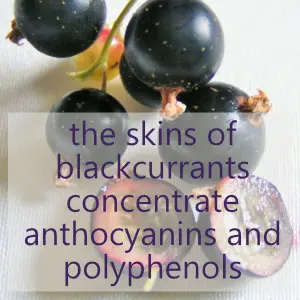
Blackcurrants contain a large number of different kinds of polyphenols in their fruits, leaves, and of course in the buds.
Anthocyanins are part of them. They are the natural pigments giving its particularly dark color to blackcurrants.
Plants produce phenols (small molecules). Several phenols together will form different kinds of polyphenols. The word “polyphenol” was introduced in the late 20th century ; before, we simply called these plant substances “tannins”. This word is much more in use, mainly by wine lovers.
Tannins are present in large quantities in grapes and green tea, for example – and in blackcurrants. When they come in touch with saliva glycoproteins, we have a sensation of astringency in our mouth.
Polyphenols lower the blood pressure and prevent fatty deposits on artery walls, have an antithrombotic effect and protect against cardiovascular diseases, and are used in the prevention and treatment of cancer and inflammatory diseases and neurodegenerative diseases.
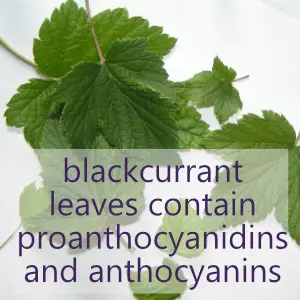
Blackcurrants contain a large number of different kinds of polyphenols in their fruits, leaves, and of course in the buds.
Proanthocayanidins are part of them. They are also called “condensed tannin”.
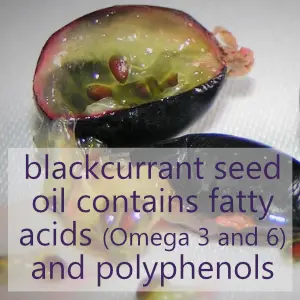
The human body cannot produce essential fatty acids itself. We ingest them, and our body modifies them for essential functions in our body.
Biological effects of blackcurrants
Antioxidant
Blackcurrant is rich in polyphenols. These molecules have a high antioxidant activity.
The amount of antioxidants contained in the fruit (anthocyanins / phenols) greatly depends on the variety, season, state of maturity and part of the plant which is used.
The antioxidant enzymes of the body increase significantly thanks to components of blackcurrants.
Anti-inflammatory
- the reduction of blood pressure
- the reduction of the risk of blood clots
- the inhibition of gout
- the reduction of tumor growth and metastasis
- the suppression of inflammation of burns
Antibacterial
Blackcurrants contain anthocyanins and acidic galactans (a form of sugar).
It has been found that acidic galactans contained in the seeds have positive effects on all duodenal ulcers.
Anthocyanins, meanwhile, have antimicrobial effects on several bacteria causing periodontal diseases, herpes and plaque, for example, and on influenza viruses.
There is no supervising instance, which would classify certain fruits into superfruits – it is a just commercial denomination. Nevertheless, the word “superfruit” generally refers to fruits which contain huge amounts of antioxidants (like vitamin C, polyphenols, flavonoids…).
Of course, in addition to the main components (water, carbohydrates, organic acids, fibers …), fruits contain active ingredients. And these active ingredients have biological effects on our bodies. Media, researchers, marketers talk about them in relation to the protection against free radicals, mental or oxidative stress, improvement of our immune system…
This website features research relating to human health conditions.
The International Blackcurrant Association does not advocate using such research to promote general retail blackcurrant products. Only products developed and proven to meet the values indicated by the research, and approved by regulatory authorities for such claims, should be promoted as such to consumers.
Nevertheless, the research is part of a growing portfolio of knowledge. It shows the wonderful potential which various types of blackcurrant may provide for human mental and physical well-being and longevity.